Chapter 24 Notes
The Digestive System
Mechanical and Chemical Digestion
1. Fundamental distinctions
2. Histology of digestive tract
- surface epithelium, basement membrane
- underlying connective tissue called the lamina propria
- blood vessels, and nerve plexuses
- inner circular smooth muscle makes tube thinner and longer when
contracted
- outer longitudinal smooth muscle makes tube shorter and thicker when contracted
- visceral peritoneum
- membrane covers all organs and continuous with parietal peritoneum
1. mesentery
2. lesser omentum
3. greater omentum
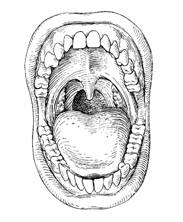
3. Structures of the oral cavity
parotid
1. "mumps"
2. between mastoid process and rami of mandible
3. drained by Stenson’s duct
4. secretes mostly amylase
submandibular
1. posterior under tongue
2. drained by Wharton’s duct
3. secretes amylase and mucus
sublingual
1. under tongue
2. secretes mucus through many small ducts
- 99% water, 1200 ml per day, secreted
- continuous secretion except during dehydration
- mucin, a protein for lubrication and protection
- electrolytes, HCO3-, HPO4-, Cl-
- lysozyme inhibits bacteria
- AMYLASE an enzyme that digests carbohydrates
- central and lateral incisors
- cuspids or canine
- first and second premolars or bicuspids
- first, second, and third molars
- dental caries: a problem before "crest"
- brush, floss, irrigate fluoride
4. Esophagus
5. Stomach
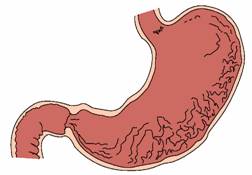
- chief cells secrete pepsinogen
- parietal cells secrete HCl to activate
pepsinogen to pepsin and Vitamin B12 intrinsic factor
- PEPSIN hydrolyzes proteins to peptides
- mucous cells secrete mucus to protect
gastric lining
- enteroendocrine cells secrete gastin to
continue stomach secretions and motility
CEPHALIC PHASE:
1. see smell taste initiate a reflex
2. nerve impulses from cerebral cortex to hypothalamus to medulla to
vagus nerve
3. parasympathetic stimulus of gastric secretions, pepsinogen and HCl
GASTRIC PHASE
1. partially digested proteins and caffeine stimulate release of the hormone gastrin
2. THE ROLES OF THE HORMONE GASTRIN ARE:- continues secretions of gastric glands
- gastrin increases stomach motility
- contraction of GE sphincter
- relaxation of pyloric sphincter and ileocecal valve
INTESTINAL PHASE:
1. enterogastric reflex inhibits stomach activity
2. GASTRIC INHIBITORY PEPTIDE blocks stomach secretions and motility
3. SECRETIN- same role as GIP
- stimulates secretions of small intestine
- stimulates pancreas to secrete bicarbonate
- stimulates liver to release bile
4. CCK
- same role as GIP
- stimulates pancreas to secrete enzymes
- stimulates contraction of the gall bladder